It’s not surprising that urban Ontario guffawed at rural MPP Bill Murdoch’s suggestion Toronto should separate from Ontario and become its own province.
The Bruce-Grey-Owen Sound Progressive Conservative’s not-too-original idea is born out of frustration after years of watching the ignorance Ontario’s urban decision- makers have displayed towards the agricultural community. As if to prove Murdoch’s point, the backlash from Toronto’s so-called political and cultural elite, who can see only to the ends of Oakville and Vaughan, proved withering as media and political pundits portrayed Murdoch as yet another country bumpkin wacko who should remain in the forest with the rest of the ogres and trolls.
But urban residents ignore Ontario’s rural communities at their own peril.

For the last four years, there has been a legitimate grass-roots anti-government revolution burbling throughout the rural communities. The most palpable rural revolutionary success was its contribution to the defeat and ultimate resignation of former Progressive Conservative leader John Tory in 2007, to the shock of urban pundits. Tory has always been and continues to be a favourite politician of Toronto’s urban elite. But he is considered a bumbler and phony among rural folk, and was stripped of his proverbial clothes by Murdoch and denounced during the provincial election.

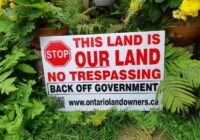
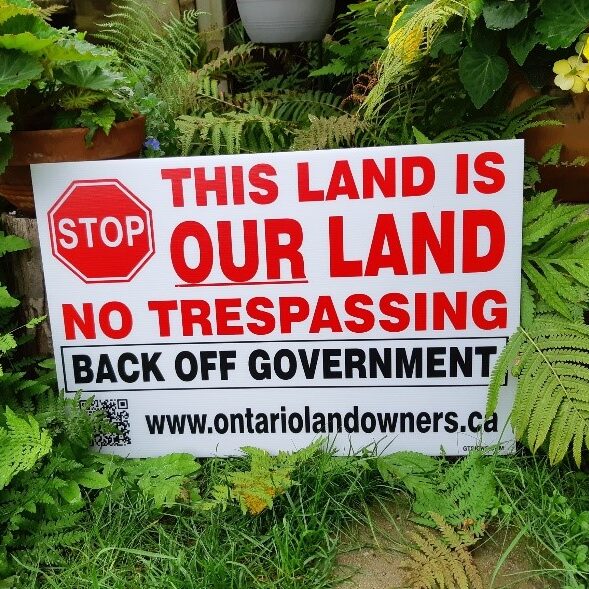
But Tory’s demise is only the most visible example of Ontario’s rural revolution. Along what is so-called Ontario’s “blue belt,” rural landowners are causing headaches for government officials and the Tory party. The Ontario Landowners Association, for instance, backs a campaign by the Lanark County landowners, the birthplace of the association, to de-amalgamate. The association plans on running a slate of councillors in the 2010 municipal election.
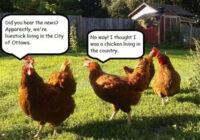
Amalgamation has never properly settled in Ottawa, and instead has prompted continuous grievances from the surrounding rural communities. The Carleton Landowners remain active in calling for the de-amalgamation of Carleton County from the City of Ottawa.
Landowners have also been in the middle of disputes across Ontario, ranging from dismantling conservation authorities and opposing a contentious tree-cutting bylaw in Muskoka, while in Brampton, landowners are complaining about the city’s animal control officers.
Although Hamilton doesn’t have a landowners association, there was talk of forming one a few years ago by current Tory MPP Randy Hillier. It wasn’t for lack of trying.
Hamilton’s urban residents continue to display their own Toronto-like mentality of willful ignorance to the city’s agricultural community. As much as most Hamiltonians would like to believe, they are the centre of Hamilton, the city is actually 80 per cent agricultural, which contributes about $1.26 billion to the city’s gross domestic product, and $171 million in salaries.
While amalgamation is a dead issue for most urban Hamilton residents, rural folks still seethe every day at how the merger killed their communities. The rural anger on display across Eastern Ontario is also present among Hamilton’s agricultural communities as farmers remain frustrated at endless regulations that constrain the way they live and work.
Hamilton’s rural community continues to also feel under-represented politically. The city continues to expand into Hamilton’s agricultural areas, putting more pressure on roads, services and people, while asking them to pay ever higher fees and taxes.

Murdoch’s populist calls to allow Toronto to separate can be ridiculed by smirking urbanites. But the province’s agricultural community can only stand so much of being pilloried by rising costs, higher taxes and encroaching government regulations before its revolution reaches the doors of Main Street.
By Hamilton Community News Editorial
http://www.ancasternews.com/news/article/205972