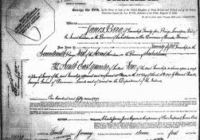
Recognized by the courts, the Crown Land Patent is a legal set of rules or an “agreement” which is known as “Contract Law – an act for a promise and a promise for an act”.
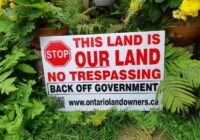
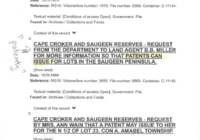
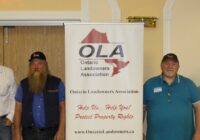
The Ontario Landowners Association (OLA) urges all rural private landowners to apply for their crown land patent. Due to the diligent and thorough research of “the letters patent”, the Ontario Landowners Association (OLA) feels confident to be in a position where we can take this iniative forward to the next step. They are easy to get and also in your best interests to have a copy in safekeeping for your reference and protection. You should apply for a crown land patent for each piece of property that you own.

You do not need to be the original owner nor do you need to own all the original granted acreage. For example, you may only own 70 acres of which was originally 100 acres, this does not matter, and you need only to apply with your present lot and concession numbers, etc. which can be found on your tax bill or property deed.
We all need TO RECLAIM OUR land, our property, our rights and you can start the process by applying for your Crown Land Patent.
Click here to download the OLA Crown Land Patent Grant Information Package ![]()
Background Information
Crown Grants and Letters Patent
During the early 13th century, certain situations developed in England that demanded the need for land/property and human rights that would protect the people from the King (Crown). At that time, the Nobles of the Land banded together and drew the Magna Carta, which is the written foundation for Parliament, Common Law, Contract Law, our electoral system etc. It was also determined that the King would “grant” parcels of land to the people for their own use, explicitly, and that the King would have no control over the lands that had been granted except for specific reservations/exceptions that remained for the King and his heirs.
Prior to 1763 there was a treaty signed by France and England where France gave up the rights to what is known as Canada. In 1763, the King’s representatives were instructed by the Privy Council to establish four separate Territories (Provinces), this was accomplished with Letters Patent (see Royal Proclamation 1763). At that time the Indian Wars were still in process and it was established that the King (Crown) would be the only entity that could purchase lands from Indian Tribes, if the Tribes so chose. The King (Crown) in turn “Granted”, by “Letters Patent”, lands to the settlers of the new Land, under the King’s prerogative. These lands were to be free hold and in some cases socouge was implemented meaning that the grantee would, to fulfill a specific obligation to the King(Crown), have the local magistrate sign and date the grant as proof, prior to the land being free hold ownership to the grantee/patentee. This was, in some instances, an obligation of the “contract”.
The Grants/Letters Patent were established with a set time limit on the King’s prerogative of 60 years. If after the 60-year period the King had not taken possession of the land back unto the Crown, the land was to be the grantee’s to hold as their own lands. That being said, the King’s (Crown) Prerogative is being diminished and our Legislative Bodies are trying to replace it with Statue Law. In the paper, The Rule of Law and the Justiciability of Prerogative Powers: A Comment on Black v. Chrétien, it states… ”as legislative decision-making is not subject to any known duty of fairness. Legislatures are subject to constitutional requirements for valid law making, but within their constitutional boundaries, they can do as they see fit. The wisdom and value of legislative decisions are subject only to review by the electorate. The judgment in Reference re Canada Assistance Plan was conclusive on this point in stating that: “the rules governing procedural fairness do not apply to a body exercising purely legislative functions”.
One might think that, the Legislative Representatives elected do not have to use reason when enacting Statue and they only have to be within their (provincial) own Constitution/Charter.
With the diminishment of the King’s (Crown) prerogative and the diminishment of our fundamental rights, we must move forward, based on the Crown Land Patents, which ensured that the people are protected in the security of ownership and use of their lands/property. The Letters Patent are constructed contracts.
Your survey creates your own plan and it includes land and property rights, which are guaranteed under the Contract Law and in some instances Common Law.
The MNR are also very concerned with the Land Patents, as are the Conservation Authorities. The MNR have a number of policies, in regards to Letters Patent. The Conservation Authorities, in many cases use the MNR as their “muscle” and, it is conceivable that they really have no power over any lands that have clear title back to the original patents.
Very few, if any, legal representatives will openly admit to the “force and effect” of the patents, but there are precedent setting cases, that under common law have determined the contractual solidity of the Letters Patent. It must be stressed that not all cases are the same and proof must be exact to proceed.
We urge all landowners to participate!
If you would like to participate:
We are asking people who have applied and obtained their Crown Land Patent Grant(s) to fill in the downloadable form below and attach a good, clear reproduction (photocopy) of your Crown Land Patent Grant.
Click here to download the OLA Crown Land Patent Grant Information Package ![]()
(Please print and fill out a form for each crown land patent you have for each piece of property you own)
Due to the diligent and thorough research of “the letters patent”, the Ontario Landowners Association (OLA) feels confident to be in a position where we can take this iniative forward to the next step.
The information garnered in regards to the Crown Land Patent Grants, the owners/persons named on this sheet, and any accompanying pages will not be sold, distributed or shared with other association, organization, or any other without the written consent of the property owner or contact person named on this sheet. All information and/or correspondence will only be with or directed to the listed property owner(s) or alternate contact.
Please respond at your very earliest as time is of the essence and the sooner we can collect this important crown land patent information, the sooner we can move another step closer.
If you should have any questions or concerns, please contact Deb Madill deb@swmadill.com